Episode 36: My Country is the Page: Moudi Sbeity on the generative power of language
In episode #36 I talk with Lebanese-American poet, author, and contemplative educator, Moudi Sbeity. His forthcoming memoir, Habibi Means Beloved, has many stories including foundational experiences of loneliness which become, for Moudi, sources of wisdom and belonging. Moudi talks about growing up in Lebanon, just after the civil war, as a gay kid who stuttered. He discusses what stuttering teaches him about the value and power of words, their ability to not just describe but to create our reality. We talk about his process of coming out in Lebanon and why he felt he had to “break up with God” in order to do so. At age 18, because of the 2006 Israel-Lebanese war, Moudi (an American citizen) was evacuated to live with family in Utah. We talk about Moudi’s complicated feelings about being a plaintiff in Kitchen v. Herbert, the case which brought marriage equality to Utah and the 10th circuit states. In 2020, Moudi found his way back to Islam through Sufism, and on his own terms. I ask him what God is to him (and he answers!). We end by asking whether “God-stuff” is “only” language, and if so, what does that actually mean? And then, we read each other some poems by Gerard Manley Hopkins and by Moudi!
Poems read or cited
Wendel Berry, Our Real Work
Gerard Manley Hopkins, Pied Beauty
Moudi Sbeity, Bread and Salt
Moudi Sbeity, "My Country Is This Page"
Music by Ben Roberts : Benjamin.Roberts447@gmail.com
Comments and ideas to Juliealicecarr@gmail.com
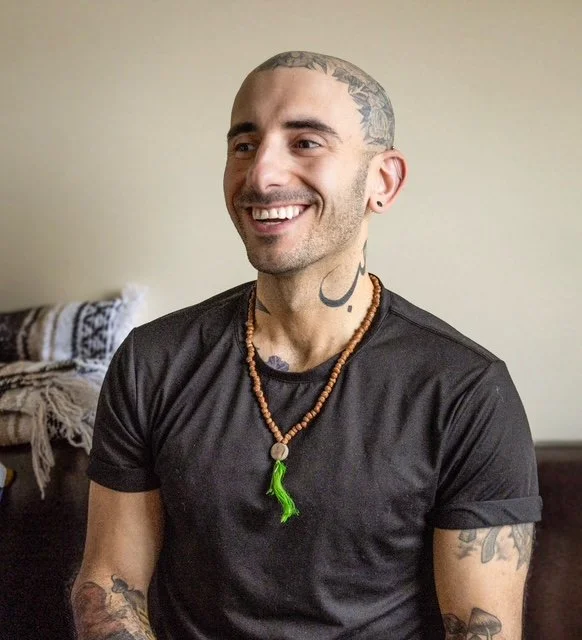
Moudi Sbeity
Moudi Sbeity is a Lebanese-American poet, author, and contemplative educator. Born in Texas and raised in Lebanon, he moved to the United States at the age of eighteen as an evacuee following the 2006 July war. In Utah, Moudi founded and operated Laziz Kitchen, a Lebanese restaurant celebrated by the New York Times as “the future of queer dining.” Moudi was also a named plaintiff in Kitchen v. Herbert, the landmark case that brought marriage equality to Utah and the 10th circuit states in 2014. A lifelong stutterer, he is passionate about writing and poetry as practices in fluency and self-expression. His memoir, Habibi Means Beloved (University of Utah Press), and poetry collection, Alhamdulillah Anyway (Fernwood Press), are set to be published in the fall of 2026. Read more on www.moudisbeity.com

Return the Key
Jewish Questions for Everyone
