Episode 38: “Light desires to Overflow”: Elliot R. Wolfson on Kabbalah
In episode #38, the first of the new season, I talk with painter, poet, and renowned scholar of philosophy and Jewish mysticism, Elliot R. Wolfson. We begin by touching on Elliot’s relationship with Kabbalah “beyond” the scholarship, even while he insists that no absolute division can be made between the practitioner and the scholar: “textual interpretation itself is a modality of ecstatic experience.” After acknowledging the short barrier of celebrity fascination with Kabbalah, Elliot offers a general history of Jewish mysticism, and defines some key Kabbalist terms: ein sof, sephirot, emanation, tzimtzum, reshimu, and the “breaking of the vessels.” We then move to a conversation about the concept of the infinite and the dynamic between the infinite and the finite, which includes questions about the relationship between good and evil and between judgment (din) and loving-kindness (chesed). Bob Dylan comes up (“there is violence in the eyes, girl”) as we think about the problem of desire. We touch on Elliot’s description of time as a “linear circularity,” and on the problem of speaking about what cannot be said except by un-saying. As Elliot has written on the first page of his newest book, Apophasis and Envisioning the Invisible: Unveiling Veils of Infinity, “Whatever scheme the inquisitive mind proposes to corroborate the contours of infinity, it is always at an infinite distance from the goal it seeks to achieve,” which is to say, this conversation is of necessity unfinished. We hope to continue.
A note: towards the end of the conversation, we talk briefly about tikkun olam (to repair the world) and Jewish messianism. We did not have time to go into these important themes in any depth, but it should be said, as a corrective to my too quick summary, that the concept of tikkun olam is at the heart of the long traditions of Jewish commitments to social justice and is not the same thing as Jewish messianism, which itself has a wide range of interpretations and applications. For some past conversations that touch on these themes see episodes 33 with Rabbi Jessica Rosenberg, 30 with Daniela Naomi Molnar, and 13 with Almút Shulamit Bruckstein Çoruh. Future conversations will return to these themes and their endlessly complex meanings and manifestations.
Texts / authors mentioned and Discussed:
Sefer Yetzirah at the Sefaria Library
Moses Maimonides, The Guide to the Perplexed Translated and with Commentary by Lenn E. Goodman and Phillip I. Lieberman
Plotinus, The Six Enneads
Gershom Scholem, On the Kabbalah and its Symbols
Emmanuel Levinas, introduction to French editions of Nefesh ha-Hayyim,L'Âme de la Vie
Nathaniel Mackey, Splay Anthem
Music by Ben Roberts : Benjamin.Roberts447@gmail.com
Comments and ideas to Juliealicecarr@gmail.com
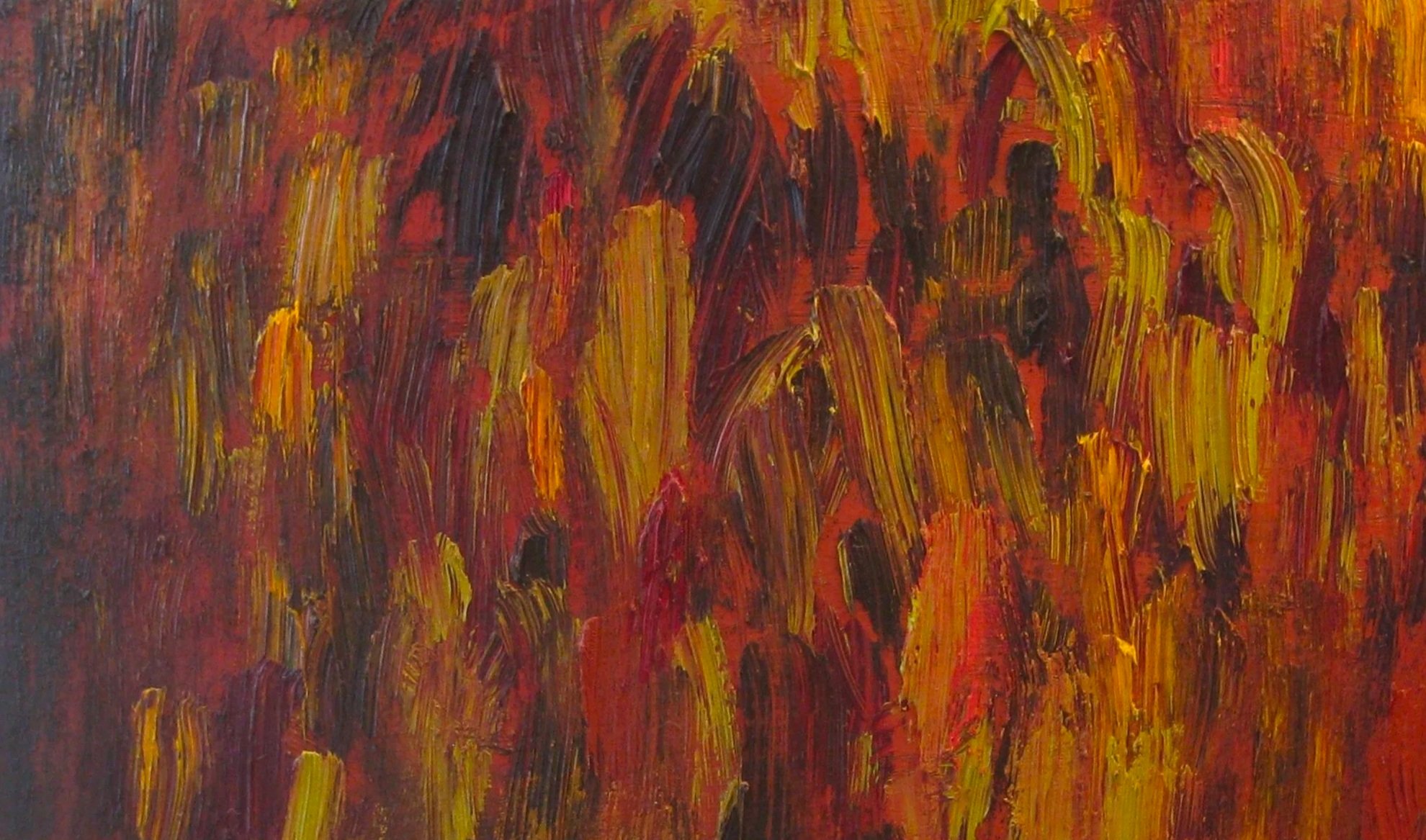
Bloodtree by Elliot Wolfson
Elliot R. Wolfson, a Fellow of the American Academy of Jewish Research and the American Academy of Arts and Sciences, is the Marsha and Jay Glazer Endowed Chair in Jewish Studies and Distinguished Professor of Religion Emeritus at University of California, Santa Barbara. He is the author of many publications including most recently The Duplicity of Philosophy’s Shadow: Heidegger, Nazism and the Jewish Other (2018); Heidegger and Kabbalah: Hidden Gnosis and the Path of Poiēsis (2019); Suffering Time: Philosophical, Kabbalistic, and Ḥasidic Reflections on Temporality (2021); The Philosophical Pathos of Susan Taubes: Between Nihilism and Hope (2023); Nocturnal Seeing: Hopelessness of Hope and Philosophical Gnosis in Susan Taubes, Gillian Rose, and Edith Wyschogrod (2025); Apophasis and Envisioning the Invisible: Unveiling Veils of Infinity (2026). His most recent work is Mystical Nihilism, Theopolitical Agnosis, and the Atheology of Faith: A Philosophical Defense of Nothing.

Return the Key
Jewish Questions for Everyone
